The Billion-Dollar Miscalculation: How Elon Musk’s Record Midterm Spending Backfired at the Ballot Box

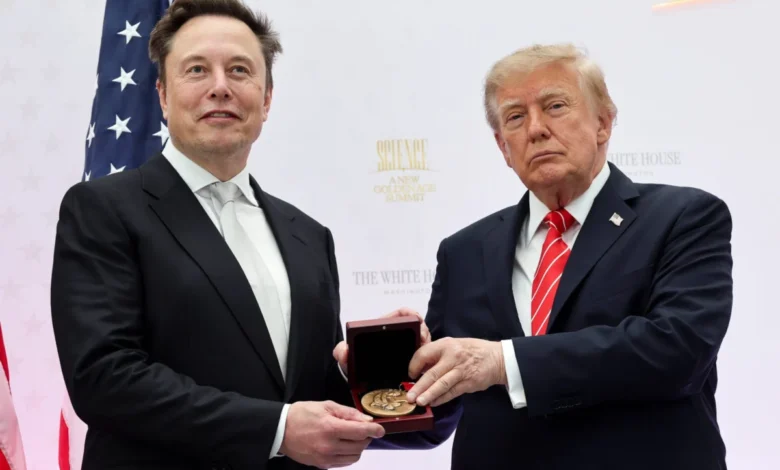
Elon Musk’s ambitious gamble on the 2026 midterm elections stands as one of the most high-profile miscalculations in the modern history of American campaign finance. Pouring nearly half a billion dollars into Republican war chests, the world’s richest individual sought to cement conservative majorities and fortify his political standing. Yet, the returns on this unprecedented financial investment were remarkably meager. Far from securing sweeping legislative wins, Musk’s massive outlays ran headfirst into a resilient Democratic wave, raising fundamental questions about the limits of billionaire influence in electoral politics and transforming his financial backing from a formidable asset into a potential political liability.
The scale of Musk’s financial intervention in the 2026 cycle was staggering. Pumping at least $474 million into Republican candidates and conservative political action committees, the tech magnate nearly doubled the political expenditures he made during the 2024 presidential election cycle. A significant portion of this capital—approximately $200 million—was funneled directly into high-stakes electoral contests in Texas, the home state of his corporate flagships, Tesla and SpaceX.
Despite these extraordinary sums, the immediate results proved disastrous for Musk’s preferred candidates. In Texas, Republican gubernatorial incumbent Greg Abbott and Senate nominee Ken Paxton both suffered decisive defeats at the hands of their Democratic challengers. The stinging losses were felt immediately on Wall Street, where shares of both SpaceX and Tesla dipped in Wednesday trading following the electoral outcome.
Beyond his home-state investments, Musk’s largesse extended across the federal map. He contributed $30 million to the Congressional Leadership Fund, the primary super PAC dedicated to electing House Republicans, alongside another $44 million directed toward various federal conservative groups. These contributions cemented his status among the party’s elite donors, placing him in a tier alongside prominent figures such as Andreessen Horowitz co-founders Marc Andreessen and Ben Horowitz, who contributed $116.4 million, and OpenAI co-founder Greg Brockman and his wife, Anna, who donated $50 million.
The juxtaposition of record-breaking expenditures with severe electoral losses has prompted a profound reevaluation among political scientists and campaign finance experts regarding the direct efficacy of massive financial infusions in contemporary democracy.
The Limits of Mega-Donations in Modern Campaigns
For decades, the conventional wisdom in American politics has posited that financial dominance invariably translates to electoral success. However, the 2026 midterms have provided a stark counter-narrative. Logan Phillips, founder of the prominent election forecasting platform Race to the White House, characterized the outcome succinctly, describing it to journalists as potentially the biggest defeat for big money in politics in American history.
This historic underperformance highlights a growing recognition among political researchers: financial contributions rarely guarantee electoral victories, particularly when candidates face deeply motivated electorates or broad public dissatisfaction. Virginia Commonwealth University political science professor Alex Keena notes that the true power of political donations lies not in securing direct wins, but in shaping the overarching national conversation.
According to this analytical framework, Musk’s $474 million was not entirely wasted if its primary function was agenda-setting. Political capital of this magnitude allows major donors to force specific topics—such as technological infrastructure, economic deregulation, climate policy, and the proliferation of data centers—onto the national legislative and public discourse agenda. By underwriting the conservative apparatus, Musk effectively maintained a powerful steering mechanism over the ideological trajectory of the Republican Party, even if individual candidates faltered at the ballot box.
Furthermore, these substantial contributions signaled an enduring alignment with President Donald Trump. As Musk races against time to orchestrate complex corporate maneuvers—including a heavily debated merger between Tesla and SpaceX that faces intense scrutiny from federal regulators—having a sympathetic executive branch ally remains a vital strategic priority.
The Anatomy of a Political Liability
While agenda-setting remains a potent byproduct of billionaire philanthropy, the direct political fallout of Musk’s involvement presents significant hazards. Following the midterms, the balance of power in Washington has shifted in ways that directly threaten Musk’s business empire. With Democrats securing key legislative oversight capabilities—including vital subpoena powers that operate independently of presidential vetoes—federal lawmakers are poised to launch aggressive investigations into Musk’s public companies and his controversial tenure within the federal government.
Musk’s governmental footprint, specifically his high-profile leadership within the Department of Government Efficiency (DOGE), has long been a source of intense public controversy. Legal challenges previously dogged the initiative, with federal courts ruling that DOGE and the Office of Personnel Management violated protocols in accessing sensitive federal data while failing to meet their stated objectives of significantly shrinking the federal deficit.
The intertwining of public service and private enterprise under the DOGE banner has drawn sharp criticism from ethics watchdogs and congressional Democrats. A comprehensive investigative report published by the Washington Post revealed that approximately two dozen former DOGE staffers transitioned from government service directly into the private sector, leveraging their federal connections to launch or back startups that collectively raised more than $500 million in venture capital. Meanwhile, following Musk’s official departure from the agency in May 2025, his private enterprises—led prominently by SpaceX—secured an estimated $10 billion in lucrative government contracts.
This visible consolidation of public authority and private commercial gain has generated substantial political blowback. Casey Michel, author of United States of Oligarchy: How America’s Wealthiest Ally with Dictators, Weaken the U.S., and Destroy Democracy, argues that Musk’s aggressive public posture fundamentally altered how voters and politicians perceive his financial backing.
Michel observes that Musk’s hyper-visible insertion into the executive branch and the campaign finance landscape serves as a textbook example of the perils of overt oligarchic intervention. Rather than acting as an unalloyed asset, Musk’s financial support increasingly functions as a liability. Candidates accepting his donations frequently find themselves tethered to the controversies surrounding his federal interventions, inviting intense scrutiny from political opponents and alienating moderate voters wary of undue corporate influence in governance.
A Chronology of Escalating Political Engagement
To understand Musk’s current political standing, it is necessary to examine the trajectory of his engagement with the electoral system over recent years.
Historically known as a relatively moderate donor who contributed to both major political parties, Musk’s approach shifted dramatically ahead of the 2024 presidential cycle. Frustrated by regulatory oversight, shifting cultural norms, and federal policies affecting his corporate ventures, he transformed into an active conservative partisan.
By late 2024 and early 2025, Musk’s alignment with the incoming administration culminated in his appointment to spearhead DOGE. During his tenure, which lasted until his departure in May 2025, he championed aggressive federal restructuring, drawing both fierce loyalty from the administration’s base and vehement opposition from institutional watchdogs and congressional Democrats.
As the 2026 midterm cycle approached, Musk amplified his financial commitments, scaling up his contributions to nearly half a billion dollars. This escalation culminated in the November 2026 elections, where despite his massive financial injection, key Republican figures in critical battlegrounds like Texas experienced severe defeats, altering the legislative landscape and empowering congressional oversight committees to initiate immediate probes into his business and governmental dealings.
Future Outlook: Will Billionaire Spending Abate?
Despite the underwhelming return on investment in the 2026 midterms, analysts remain divided on whether Musk will curtail his political spending in future electoral cycles.
SUNY Stony Brook political sociology professor Jennifer Heerwig points out that individual income remains one of the most reliable predictors of political giving. Given Musk’s status at the pinnacle of global wealth, his continued participation in super PAC financing and federal electoral politics remains highly probable, even if the strategic deployment of those funds evolves.
Musk himself has previously expressed ambivalence regarding the long-term sustainability of his political giving. Speaking at the Qatar Economic Forum in May 2025, he suggested a tapering of his active financial participation, telling interviewers that he intended to scale back his political contributions significantly in the future, remarking at the time that he felt he had "done enough."
However, the fluid nature of American politics and the constant evolution of regulatory threats facing Tesla, SpaceX, and his other corporate entities mean that the temptation to deploy capital to shape the political environment will likely persist. Whether future outlays will mirror the staggering scale of the 2026 midterms will depend heavily on the outcomes of the impending congressional investigations and the shifting priorities of the conservative movement heading toward the 2028 presidential election.
Ultimately, the 2026 midterm cycle has redefined the narrative surrounding billionaire political expenditures. It has demonstrated that while vast financial resources can shape public debate and set political agendas, they cannot single-handedly override shifting voter sentiments, local political dynamics, or the mounting public skepticism surrounding the intersection of immense private wealth and public governance.
Related posts: